Be yourself; Everyone else is already taken.
— Oscar Wilde.
This is the first post on my new blog. I’m just getting this new blog going, so stay tuned for more. Subscribe below to get notified when I post new updates.
Be yourself; Everyone else is already taken.
— Oscar Wilde.
This is the first post on my new blog. I’m just getting this new blog going, so stay tuned for more. Subscribe below to get notified when I post new updates.
Growth is a part of life, everything is either growing or dying, and as Benjamin Franklin once said “Without continual growth and progress, such words as improvement, achievement, and success have no meaning.”
All businesses rely on growth to stay ahead of an ever increasing overhead cost and this growth is best achieved through an increase in sales. So exactly how does a business increase sales? Well besides retaining loyal customers and then getting those loyal customers to buy more product, the business also needs to constantly attract new customers. Branding is a vital component in both the retention of customers and the attraction of new customers to a company.
The growth of a brand doesn’t simply happen, companies continually adopt growth strategies to grow their customer base. James Cash Penny, founder of JC Penny put it nicely when he said “Growth is never by mere chance, it is the result of forces working together”.
To examine possible growth strategies that a brand can use to grow their brand, lets look a company the specializes in pet products Rogz or as they put it “The worlds coolest pet gear and most enjoyed pet brand on planet earth and beyond.”
Rogz specializes in pet harnesses and accessories for cats and dogs. Their product range is vast and includes such things as pet harnesses, toys, beds, bowls and tags.


Rogz product range is of good quality and have been on the the market for a number of years and they have achieved a solid reputation. Their products are found in most pet stores, veterinarians and many supermarkets. The Rogz brand has already achieved great success in the pet world and further growth of the brand would require carefully thought out strategies.
Rogz is a pet accessories brand, and as such the growth strategies that could be used might focus on product development, market development, market penetration and possibly diversification. The key to the success of the growth strategy would be to remain in line with the core values and vision of the brand.
So far as product development goes, Rogz could consider a number of extension strategies. The product offering of Rogz is large and it is evident that they already use a line extension strategy. Fashions change, so too does the style of harnesses, collars, pet toys etc. so line extensions are simply adding new colours, materials and styles to keep the range fresh, appealing and relevant.
So far as diversification, Rogz have already extended their product offering into pet insurance through a co branding extension with Hollard insurance. This extension, while completely different from their core product offering, is something that is relevant to their brand and appeals to their target market.
To grow the brand further, Rogz could possibly consider an endorsement strategy or other extension strategies. Perhaps an endorsement strategy could be considered to team up with a leading pet food manufacturer to perhaps make up specific line of pet food or to even include a discount voucher with the food to purchase Rogz products or visa versa. The same could be done with a number of pet care products.
Pets add life to a home and some of my fondest childhood memories involve my interactions with the family dogs. Children who grow up with pets in the house will be exposed to the Rogz brand from childhood and in all probability would continue to support the brand when they have pets in adulthood. Brand extensions could be used to drive the brand into the hearts and minds of youngsters who grow up in pet households.
A few brand extension strategies that could be used, could be the introduction of Rogz pet clothing lines, Rogz human apparel and accessories, Rogz pet treats or pet nutritional products, pet shampoos or even grooming kits, the list is endless.
Rogz is a pet brand, so any brand extensions would need to be in line with the brands core values so as to avoid consumer confusion. Rogz has already extended their brand from collars and harnesses, to pet toys, food bowls and into pet beds. So the next logical step would be to move into pet clothing and blankets which would be very much in line with their brand.
The risks of extending the Rogz brand into categories such as human apparel is that the essence of the brand may be lost and people may begin to not see it as a pet product. The greater risk still, would be a consumer resistance to buying into a brand that is perceived as pet wear.
I do believe, that the extension of the brand into human apparel aimed at the pet owner who is active, maybe running or walking with their dogs could work for the brand. Possibly an endorsement strategy with an sportswear brand could work for this brand.
The benefits would be increased brand exposure into a larger market which would increase sales and company revenues into the future.
In today’s highly competitive market place, brand growth and awareness is key to survival. A brand needs to continually strive for growth and companies need to adopt strategies which will effectively expand the brand into new markets. These strategies need to ensure that the brand remains relevant and remains true to its vision.
The main objective of any organisation is to attract the maximum number of customers to buy their products and services. Branding of products and services enables companies to define their target markets. The target market for each brand has distinct boundaries and thus organisations create multiple brands in order to cater for different segments within the market. When a company owns a number of different brands it is known as a portfolio of brands.
Having a portfolio of brands enables the company to cater for multiple segments of the market, and in so doing is able to maximize its exposure to a larger audience. In order for this to be effective, the portfolio of brands needs to be effectively managed. Effective management of the portfolio ensures that sales are increased with a decreasing cost and marketing effort.
To discuss the topic of managing a brand portfolio, lets look at the holding company of one of South Africa’s iconic fashion retailers which is currently in the process of restructuring and re branding itself in order to survive its fall from grace. The company I refer to is Edcon Holdings, under which a number of retail brands like Edgars, Jet & CNA fall.

It is not fair to blame poor brand portfolio management for the decline of the company as a whole, this was largely in effect a direct result of and acquisition by Bain Capital and the subsequent gearing of debt in an environment of declining retail spending. There are many articles to read pertaining to this and I will not touch on this further. Lets rather consider the current situation, how the company introduced brands, why they did it and why they have closed and re branded brands.
The flagship brand within the Edcon Holding stable is Edgars, a department store which has dominated the fashion market in South Africa for many decades. Along side the Edgars brand, Edcon owns Jet, primarily aimed at a lower income group within the South African fashion market.
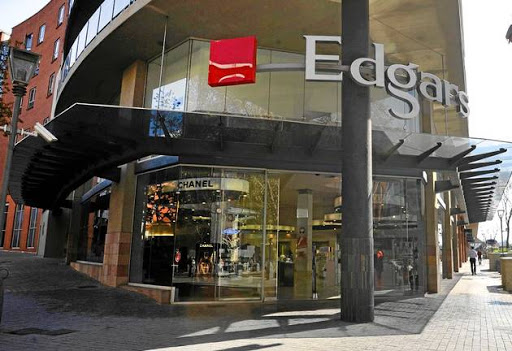

South Africa has since 1994 gained exposure to the international market and in so doing has attracted the attention of international brands wanting to expand onto the African continent, starting with South Africa. Prior to 1994, a relatively new retailer, Mr. Price, was experiencing great success and was gaining massive market share in the South African fashion market.
On the local scene, Edcon introduced a number of brands like Edgars Active, Red Square and Boardmans (acquisition), to name a few. The inclusion of Boardmans and Edgars Active appear to have been introduced in order to compete for market share from the successful Mr Price Sport and Mr. Price Home respectively.
According to the new CEO, Grant Pattison, who has been brought in to turn the company around, Edcon has made a number of mistakes over the years which have added to their demise. In order to fend off the international brands like H&M, Zara and Cotton On the product offering in the Edgars stores moved more toward international brands which changed the perception of the Edgars brand and lead customers to consider Edgars an expensive store. Further to this, Edgars opened up a way too many new stores. Ref Business Maverick
Edcon’s current financial state has forced it to look at its brand portfolio, and has adopted a number of Klopper & North’s strategies to rationalize their portfolio. They have sold some brands, Edgars Active brand has been sold to Footgear and Legit has also been sold, ref Moneyweb They have closed Prato, Temptations and Blacksnow, ref Wikipedia. They have rebranded Red Square to Edgars Beauty and Boardmans to Edgars Home, both of which have been moved from independent stores back into the Edgars stores. Further to this they are changing the brand status of Edgars to regain its lost market share by going back to support successful local brands.
Consumers had largely lost trust in Edgars as they moved away from their traditional brand identity in order to fend off international competition. It is not going to be easy to turn the Edcon group around, but I believe that the new CEO Grant Pattison is on the right track, by focusing on the main brands within the organisation, restoring their own unique identity and getting back to the basics they might just have a chance. Ref Business live, biznews.
According to Klopper & North the aim of the brand portfolio should be to limit brand confusion and provide clarity in product offering to both the consumer and the organisation. Lets hope that Edcon can achieve just this and that they are able to effectively manage their brand portfolio back to its former glory.
In today’s highly competitive market place, a brand requires more than just a good product or service to achieve success, the brand needs to know and understand its target market and then resonate with that market. In order for a brand to effectively communicate with their target audience, it needs to adopt a holistic approach to sending out its brand message which can only be achieved through Integrated Marketing Communications.
Integrated Marketing Communications is a simple concept which ensures that all forms of brand communications are carefully linked together and that they all work in harmony with one another.
In order for us to explore the concept of integrated marketing communication, Ill explore a small up and coming South African brand that you may or may not have heard of, called Blu Betty. www.blubetty.co.za . Blu Betty is manufactured by a small South African shoe manufacturer who has over the past few years effectively branded themselves within a very competitive market to the point where they now enjoy a good following.
The unique value proposition of Blu Betty is that they produce shoes that are a relevant, contemporary design with a touch of quirkiness that sets them apart. The Blu Betty label is not available in mainstream retail outlets, instead they rely mostly on their online sales, specific craft markets and selected boutiques. To this end, they have been hugely reliant on digital and social media marketing to drive sales.

Blu Betty’s integrated marketing communication is very effective at creating brand awareness and driving sales. They are very active on both Facebook and Instagram. And while both of these social media platforms are linked and share the same content, the content is regularly added to with frequent posts, fresh pictures and news of latest style offerings as well as locations of upcoming markets. They are also present on Pinterest and Twitter but seem to not be as effective on these two platforms.

While I am not into ladies shoes, I have been witness to the emotional responses of women to the brand. The theme of their website, the brand image and identity resonates well with their target market and all communication is consistent with their unique brand identity.
Sadly Blu Betty operates in a highly competitive segment of the market which is prone to cheap Chinese imports and copycat tactics of other manufacturers which makes effective and consistent brand messaging very important. The real challenge for this brand lies largely on how effective their integrated marketing communication will be in fending off the competition to retain and grow market share.
In the modern digital world, social media and other digital platforms offer an effective way for brands to communicate with their target market. Brands have many avenues in this ever changing world to communicate with their target market and can enjoy the benefits of their consumers sharing and amplify their voice. It is vital that the brand communicates its message effectively and consistently in order to resonate with its target market. Integrated Marketing communication ensures that this message is communicated effectively.
Reference:- multimediamarketing
It goes without saying, it takes way more than simply a product or service to create a meaningful brand. For a brand to become truly memorable, the company behind the brand needs to create the impression that it is living the brand. Exactly how a company achieves this is very dependent on effective internal marketing and training to achieve a full buy in from every employee within the organization. Companies need to ensure that the brand values are consistently and effectively communicated at every level.
In order for the brand values to be consistently communicated through everything the company does, requires the company to map out and plan every point of contact so as to ensure that the correct message is conveyed at every point. Touch points are the points at which consumers are in contact with the brand and will include things such as web sites, retail outlets, advertisements etc. These touch points need to be geared towards serving the brand purpose. To explain this further lets explore the First National Bank (FNB) brand.

According to The Bankers 2018 ranking, FNB was ranked as South Africa’s most valuable bank and is currently one of South Africa’s big 5 banks (Wikipedia ) The bank offers a number of banking solutions both in the personal banking sector as well as in the business banking sector. The most common touch points of this banking brand include their large foot print of branches and ATM’s, as well as their online banking platforms, Apps and then of course their call centers which are further broken down into numerous sub sections, namely credit card, business etc.
The touch points of FNB are vast and the brand has done a good job of mapping these out and establishing a culture amongst its employees to effectively serve the brand purpose in alignment with their tagline “How can we help you”. In order to achieve this, FNB has had to get a full buy in from all employees within their organisation.
Looking at the careers section on the First Rand Limited website www.fnb.co.za, it becomes evident that the process of establishing employee buy in in order to create a brand culture starts right at the beginning of the recruitment process. Following on from recruitment, FNB has implemented an internal marketing process which is geared to serve the brand purpose and to remind employees of this purpose. The FNB internal marketing has been effective in making their employees feel that they are part of something bigger.
Through their internal marketing process, the employees are encouraged to be entrepreneurs within the organisation and they have effectively instilled an owner manager culture where people work in smaller groups. The company culture has been to instill accountability, ethics, effectiveness, helpfulness and innovation into the heart and minds of their employees.
The only way that any internal marketing campaign is able to achieve a full buy in from employees, is for it to have full and total commitment from top management down. FNB has taken its branding seriously at every level and have effectively embedded a brand culture within its organisation that is line with its brand values.
The FNB internal marketing process has been very effective in establishing the employee culture that serves the brand purpose and this has been instrumental in shaping the public’s perception of their brand. This culture is communicated not only through their employees, but also in their innovative banking solutions which are seen to help make peoples lives easier.
It is no easy task to achieve a full employee buy into your brand, and the only way for any organisation to achieve this is through effective internal marketing. Without your employees involvement it is impossible to communicate a consistent brand message to your target audience. In my opinion, FNB has been very good at creating an internal marketing system which serves the purpose of their brand.
References:- http://www.fnb.co.za
Effective positioning and differentiation of a brand in any market is what defines its success or failure. In today’s highly competitive market place, where companies are constantly trying to get consumers attention it is differentiation and positioning which ultimately sets one brand apart from another. I always stand in admiration of companies that start out as newbies in highly dominated sectors of the market, and then, within a relatively short space of time turn the market on its head to become outright market leaders. The secret to how companies achieve this lies in how well they position and differentiate their brands in the market place. So what exactly is positioning and differentiation and how does it work?
As defined by Wikipedia, “positioning is one of the most powerful marketing concepts, it refers to the place that the brand occupies in the minds of the consumer and how it defines its differences from it’s competitors”.
The first steps involved in effective positioning begin with defining the correct segment and target market, understanding the customer needs and then moving through to communicating the benefits of the brand to the market. Further to this the competition in the particular segment needs to be analysed so as to clearly define the difference between the brand and it’s competition. The brand needs to ensure that it differentiates itself from its competitors and that the difference is effectively communicated so that the brand becomes the product of choice amongst consumers.
One South African company that has been very effective at positioning and differentiating itself in a highly competitive market is Capitec Bank. In fact Capitec have been so good at it that their achievements have not only been recognized locally, but internationally as well. Capitec is a relatively new company, which started out as a micro lending company in the financial services market in 1999 and then subsequently evolved to become the 3rd largest bank in South Africa. Capitec Bank is now considered as one of the fastest growing brands in the country.

The Lafferty Global rankings awarded Capitec a 5 star rating, the only South African company to be awarded 5 stars and also making it the top rated bank in the world. Further to this, Credit Suisse in their analysis of over 3000 companies around the globe, recognized Capitec bank as a company that would out perform its competitors within the next 3 to 5 years. Interestingly enough, Capitec Bank was the only South African company to make it onto the Credit Suisse list.
These remarkable achievements have been gained in a relatively short time frame, where the company has grown from entry level banking to obtaining a stature where it is now also acceptable to high income earners. So exactly how has Capitec bank achieved this? the answer lies in their effective brand positioning.
The company’s main focus is on the low to middle income groups as it continues to enjoy strong growth in the banking sector, where it is said to have a third of the employed people in South Africa as clients. So what has Capitec done differently?
Capitec has recognized the needs of consumers and has served those needs well, they have positioned their brand as simple, affordable and transparent. These attributes are evident in every touch point of the brand, from the branch through to the digital banking platforms. These brand elements have been introduced to the market as the new and smart way to bank and the company’s primal focus has been to help clients to improve their financial lives.
So exactly how is this different from any other bank? First and foremost they identified the high cost of bank charges and the effects these have on banking clients. They cut out the frills and offered banking products with attractive and simple pricing options with no hidden costs, which had massive appeal to the working class. They further simplified the banking experience, made customers feel that they were in control, offered affordable and transparent banking charges and allowed customers to personalize their interest rates and then established a personalized client experience to build long term relationships. In other words, they looked at where the competition was weak and offered products and services which capitalized on those weaknesses to gain massive market share. While Capitec Bank is a relatively new player in the banking sector, they adopted the slogan “The smart way to bank” and left the other banks to play catch up.
The fundamentals of the Capitec brand to help customers improve their financial lives are simplicity, value for money, accessibility and client experience. These brand attributes extend into how the Capitec business model is run and the company is seen to be living the brand.
Capitec is a client centric brand and has focused strongly on customer satisfaction with a multi disciplined approach to marketing, where they don’t just focus on selling, but also educate people in a way to help improve their understanding of money. www.capitecbank.co.za
In today’s world, where the consumer is constantly bombarded by marketing noise, brand positioning and differentiation is the difference between win and lose. Those that effectively position and differentiate their brands are the ones who become front of mind in the consumer and these brands will continue to dominate their respective segments of the market.
References:-http://www.marklives.com/2019/05/brandfocus-capitec-on-branding-a-client-centric-bank/ https://www.iol.co.za/business-report/capitec-is-overall-brand-leader-in-south-africa-report-10501048 https://www.fin24.com/Companies/Financial-Services/why-sas-capitec-is-best-bank-in-the-world-20170627-2
https://www.bizcommunity.com/Article/196/82/45534.html
https://www.capitecbank.co.za/bankbetterlivebetter/articles/capitec-rated-top-bank-in-sa
The visual and verbal language of any brand defines how the brand expresses itself, determines its behavior and further influences the feelings and relationships associated with the brand. The elements of the visual and verbal language of a brand can be further broken down into the tone of voice, the symbols and the story. In order to explain how the verbal and visual language of a brand defines the brand identity, lets explore the Mercedes Benz brand.

At the heart of the Mercedes-Benz brand lies the brand values of tradition, innovation, quality and safety. This innovation is portrayed as modern and expressed in terms of the brands heritage, that being quality German engineering through innovation in performance and safety.
Brand identity is the unique meaning of a brand, it is an expression of who the brand is, what it does and why it matters. The brand identity highlights the brands purpose and how that purpose adds value. The Mercedes Benz brand values have shaped its brands identity over time to being that of elegance and authenticity through engineering excellence. The Mercedes Benz brand values and identity are consistently expressed in every new product that they launch into the market. When launching a new model, Mercedes Benz make a point to be seen as innovating the automotive market in terms of technology, safety and luxury.
The Mercedes Benz brands tone of voice is that of elegance, performance and luxury. The personality of the brand would be that of a discerning perfectionist, portraying power, confidence and sophistication. The visual and verbal language of the brand is that of being one of elite status and is clearly aimed at the wealthy successful professional.
Brand symbols are a vital component in achieving a clear brand identity and in order for the symbol to be effective it needs to be easily recognizable, unique and have a clear representation of the brand. Mercedes Benz uses the brand symbol of the 3 pointed star, which is said to symbolize Daimler’s ambition for world domination, with each point said to represent land, water and air.
Further to the 3 pointed star, Mercedes Benz carries distinctive design lines across their various models to make their cars clearly recognizable and distinctively Mercedes Benz. An example of this can be referenced through the front grill shapes with the star symbol making a focal point to clearly define the cars as Mercedes Benz.

Mercedes Benz draws its story from its long history dating back to 1926 and according to Wikipedia was the biggest selling premium automobile brand in 2018. Mercedes Benz built their story on luxury and elegance and became know as an automobile for the social elite. In recent years Mercedes Benz realized that they needed to capture the attention of the younger generations and added performance to their brand identity.
Mercedes Benz advertising mediums, in both mainstream media and on all digital platforms, deliver relatable messages which are both relevant and creative. These messages drive home the product attributes of luxury, performance and safety which ultimately portray the brand identity of prestigious exclusivity.
The constant attention to detail, overall quality and comfort has produced a product that is seen to be a superior car in the worlds automotive arena. Mercedes Benz have cleverly positioned vehicles into the market that portray status and prestige all the way along the ladder of success.
It is without doubt that Mercedes Benz communicates a verbal and visual language that has enhanced their brand identity of prestige, exclusivity, sophistication and elegance which is clearly captured in their slogan “the best or nothing”.
The visual and verbal language of a brand are vital in defining the brands identity. Mercedes Benz have been very effective and consistent with their visual and verbal language to solidify their brand identity of elegance into the hearts and minds of consumers around the globe.
References:- http://www.mercedes-bendz.co.za http://www.mercedes-benz.com http://dasauto-skema.blogspot.com
This is an example post, originally published as part of Blogging University. Enroll in one of our ten programs, and start your blog right.
You’re going to publish a post today. Don’t worry about how your blog looks. Don’t worry if you haven’t given it a name yet, or you’re feeling overwhelmed. Just click the “New Post” button, and tell us why you’re here.
Why do this?
The post can be short or long, a personal intro to your life or a bloggy mission statement, a manifesto for the future or a simple outline of your the types of things you hope to publish.
To help you get started, here are a few questions:
You’re not locked into any of this; one of the wonderful things about blogs is how they constantly evolve as we learn, grow, and interact with one another — but it’s good to know where and why you started, and articulating your goals may just give you a few other post ideas.
Can’t think how to get started? Just write the first thing that pops into your head. Anne Lamott, author of a book on writing we love, says that you need to give yourself permission to write a “crappy first draft”. Anne makes a great point — just start writing, and worry about editing it later.
When you’re ready to publish, give your post three to five tags that describe your blog’s focus — writing, photography, fiction, parenting, food, cars, movies, sports, whatever. These tags will help others who care about your topics find you in the Reader. Make sure one of the tags is “zerotohero,” so other new bloggers can find you, too.

 Alistair's Blog