The main objective of any organisation is to attract the maximum number of customers to buy their products and services. Branding of products and services enables companies to define their target markets. The target market for each brand has distinct boundaries and thus organisations create multiple brands in order to cater for different segments within the market. When a company owns a number of different brands it is known as a portfolio of brands.
Having a portfolio of brands enables the company to cater for multiple segments of the market, and in so doing is able to maximize its exposure to a larger audience. In order for this to be effective, the portfolio of brands needs to be effectively managed. Effective management of the portfolio ensures that sales are increased with a decreasing cost and marketing effort.
To discuss the topic of managing a brand portfolio, lets look at the holding company of one of South Africa’s iconic fashion retailers which is currently in the process of restructuring and re branding itself in order to survive its fall from grace. The company I refer to is Edcon Holdings, under which a number of retail brands like Edgars, Jet & CNA fall.

It is not fair to blame poor brand portfolio management for the decline of the company as a whole, this was largely in effect a direct result of and acquisition by Bain Capital and the subsequent gearing of debt in an environment of declining retail spending. There are many articles to read pertaining to this and I will not touch on this further. Lets rather consider the current situation, how the company introduced brands, why they did it and why they have closed and re branded brands.
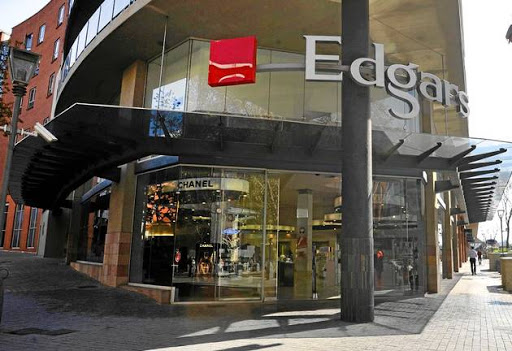
The flagship brand within the Edcon Holding stable is Edgars, a department store which has dominated the fashion market in South Africa for many decades. Along side the Edgars brand, Edcon owns Jet, primarily aimed at a lower income group within the South African fashion market.

South Africa has since 1994 gained exposure to the international market and in so doing has attracted the attention of international brands wanting to expand onto the African continent, starting with South Africa. Prior to 1994, a relatively new retailer, Mr. Price, was experiencing great success and was gaining massive market share in the South African fashion market.
On the local scene, Edcon introduced a number of brands like Edgars Active, Red Square and Boardmans (acquisition), to name a few. The inclusion of Boardmans and Edgars Active appear to have been introduced in order to compete for market share from the successful Mr Price Sport and Mr. Price Home respectively.
According to the new CEO, Grant Pattison, who has been brought in to turn the company around, Edcon has made a number of mistakes over the years which have added to their demise. In order to fend off the international brands like H&M, Zara and Cotton On the product offering in the Edgars stores moved more toward international brands which changed the perception of the Edgars brand and lead customers to consider Edgars an expensive store. Further to this, Edgars opened up a way too many new stores. Ref Business Maverick
Edcon’s current financial state has forced it to look at its brand portfolio, and has adopted a number of Klopper & North’s strategies to rationalize their portfolio. They have sold some brands, Edgars Active brand has been sold to Footgear and Legit has also been sold, ref Moneyweb They have closed Prato, Temptations and Blacksnow, ref Wikipedia. They have rebranded Red Square to Edgars Beauty and Boardmans to Edgars Home, both of which have been moved from independent stores back into the Edgars stores. Further to this they are changing the brand status of Edgars to regain its lost market share by going back to support successful local brands.
Consumers had largely lost trust in Edgars as they moved away from their traditional brand identity in order to fend off international competition. It is not going to be easy to turn the Edcon group around, but I believe that the new CEO Grant Pattison is on the right track, by focusing on the main brands within the organisation, restoring their own unique identity and getting back to the basics they might just have a chance. Ref Business live, biznews.
According to Klopper & North the aim of the brand portfolio should be to limit brand confusion and provide clarity in product offering to both the consumer and the organisation. Lets hope that Edcon can achieve just this and that they are able to effectively manage their brand portfolio back to its former glory.
 Alistair's Blog